

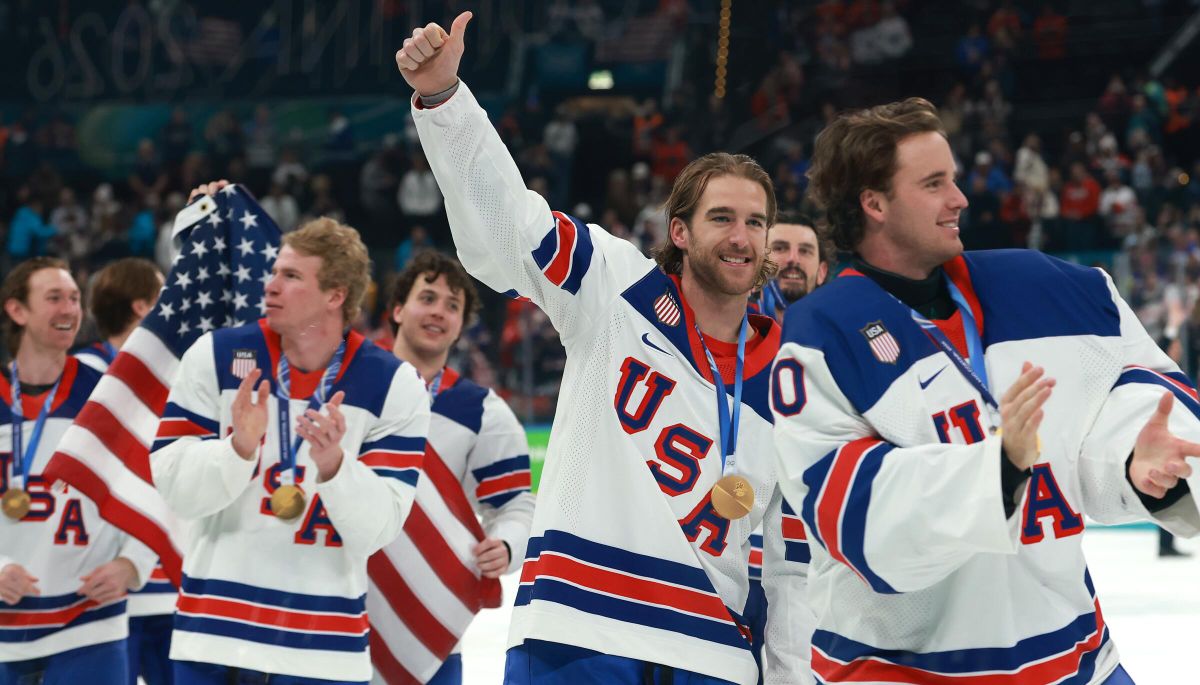
A recent online video of the United States men’s Olympic hockey team celebrating their gold medal victory has sparked a bigger conversation about fairness in how male and female athletes are treated in sports.
The clip, which included appearances by high‑level officials celebrating with the team, has drawn attention not just for the celebration itself, but for what it highlights about the differences between men’s and women’s athletics.
At the 2026 Winter Olympics in Milan and Cortina, Italy, both the U.S. men’s and women’s hockey teams won gold medals, defeating Canada in dramatic finals.
While both teams achieved the highest success in their sport, the celebration and visibility of the men’s win quickly went viral online, bringing praise for their performance and their star status.
For many long‑time observers of women’s sports, that moment underscores a familiar problem: even when women’s teams achieve exceptional results, they rarely receive the same level of attention or support as men’s teams.
One lifelong athlete, who has now spent more than five decades in sport as a competitor, coach, and fan, says the reaction reflects long‑standing patterns in athletics.
She notes that throughout her life, from playing soccer and basketball in school to trying out for professional women’s leagues, she constantly saw a gap in how male and female athletes were supported.
In her experience, women’s sports often had fewer resources, poorer facilities, and less public recognition, even when the athletes themselves performed at high levels.
Early in her college years, she played on teams with outdated uniforms, minimal coaching resources, and had to pay for her own equipment, while men’s teams at major universities enjoyed better funding, larger crowds, and full scholarships.
This difference extends into the modern era. While professional leagues like the NBA and NFL attract massive audiences, broadcast deals, and high salaries, women’s leagues, including the WNBA, operate with far smaller media coverage and lower pay.
Fans of women’s sports have been pushing for greater visibility, investment, and equality for years.
Social media has helped amplify women athletes’ stories. Players and teams now share training videos, highlights, and personal moments online, building direct followings and showing the world the hard work behind their success.
Women’s hockey, in particular, has a strong Olympic record.
The U.S. women’s team has a nearly perfect history in international competition, earning medals in every Olympics they’ve competed in and often with higher consistency than the men’s team.
Despite that record, many people feel women’s achievements are still overshadowed. Even when both teams win gold medals at the same Games, the men’s accomplishments often receive more celebration, more media coverage, and more public praise.
Advocates say this doesn’t diminish men’s success. Instead, they argue that celebrating women’s achievements just as loudly would benefit athletes, inspire young fans, and help build greater equity in sports.
The conversation sparked by the hockey celebrations is part of a larger shift in how sports are discussed in public.
As more fans, former players, and commentators share their experiences, the hope is that all athletes will be recognized and supported for their dedication, skill, and achievements.







Leave a Reply