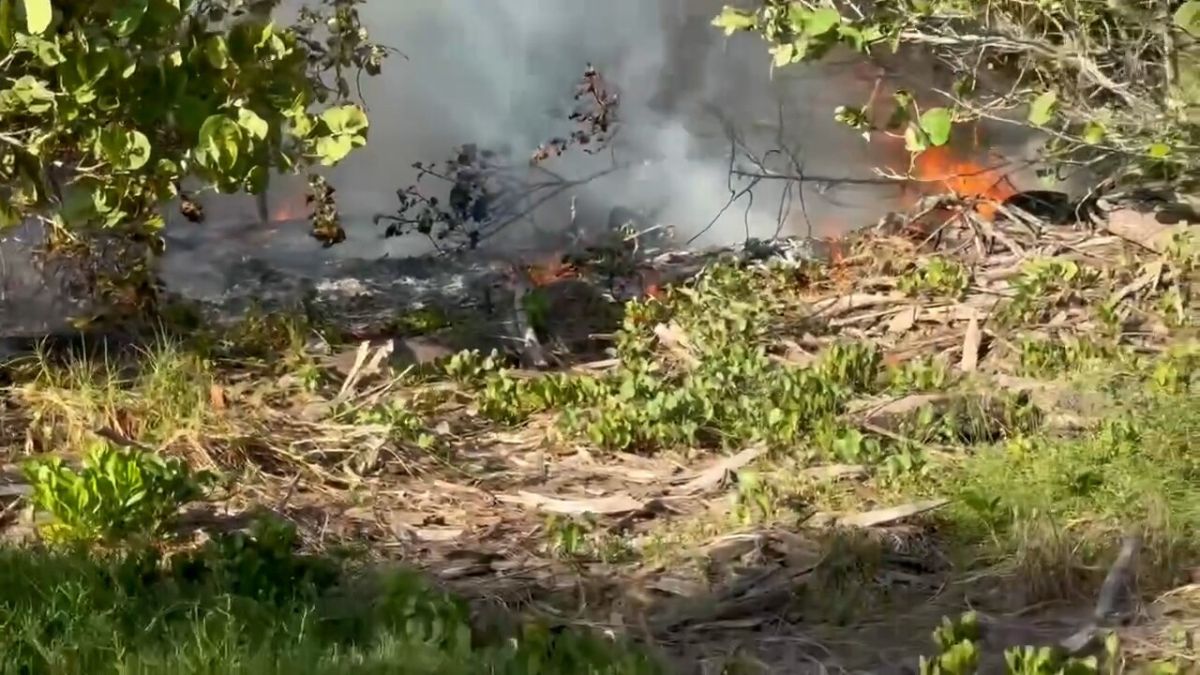
A fire broke out Sunday evening on Egmont Key, a small historic island located at the mouth of Tampa Bay, triggering a coordinated emergency response from multiple local and federal agencies.
Thick columns of black smoke rose from the island and were visible to residents along the surrounding coastlines and to boaters out on the water.
The Hillsborough County Sheriff’s Office confirmed its Marine Unit responded after a 911 call came in at 5:43 p.m. Deputies were dispatched to assist local and federal partners already working to manage the situation on and around the island.
The U.S. Fish and Wildlife Service was also involved in the response, providing additional support as crews worked to contain the blaze.
Flames burned through palm trees and brush across portions of the island, sending heavy smoke into the sky. The dark plumes were reported as highly visible from coastal areas throughout the greater Tampa Bay region.
Photos shared by the Hillsborough County Sheriff’s Office showed fire moving through island vegetation along the shoreline.
As of Sunday evening, no injuries had been reported in connection with the fire. Marine assets remained positioned in the water near Egmont Key to support ongoing containment and safety operations.
Authorities had not yet determined the exact cause of the fire, and it remained unclear how many acres of land had been affected by the time crews were working to bring the flames under control.
Egmont Key is a protected barrier island and state park known for its wildlife refuge, historic lighthouse, and Civil War era fort ruins. The island sits at the entrance to Tampa Bay between the cities of St. Petersburg and Fort Myers Beach.
Because of its protected status and the wildlife that calls it home, fires on the island draw immediate attention from both state and federal agencies, including the U.S. Fish and Wildlife Service, which manages much of the land there.
Authorities urged boaters in the area to stay clear of Egmont Key and maintain a safe distance to avoid interfering with responding marine vessels and crews.
Officials also noted that residents who could see the smoke from nearby shorelines did not need to contact emergency dispatchers unless they were in immediate personal danger.
The multi-agency response reflected the complexity of reaching and managing an emergency on a barrier island with no road access. Crews had to rely entirely on marine vessels to get to the scene and support operations throughout the evening.
The fire came on a Sunday when the Tampa Bay area was experiencing warm spring conditions, typical of late May in the region. Dry vegetation on barrier islands can spread fire quickly, making early response critical to limiting damage to the natural habitat.
Investigators were expected to continue assessing the extent of the damage to the island’s landscape and wildlife areas in the days following the incident. No timeline was given for when emergency crews would fully clear the scene.