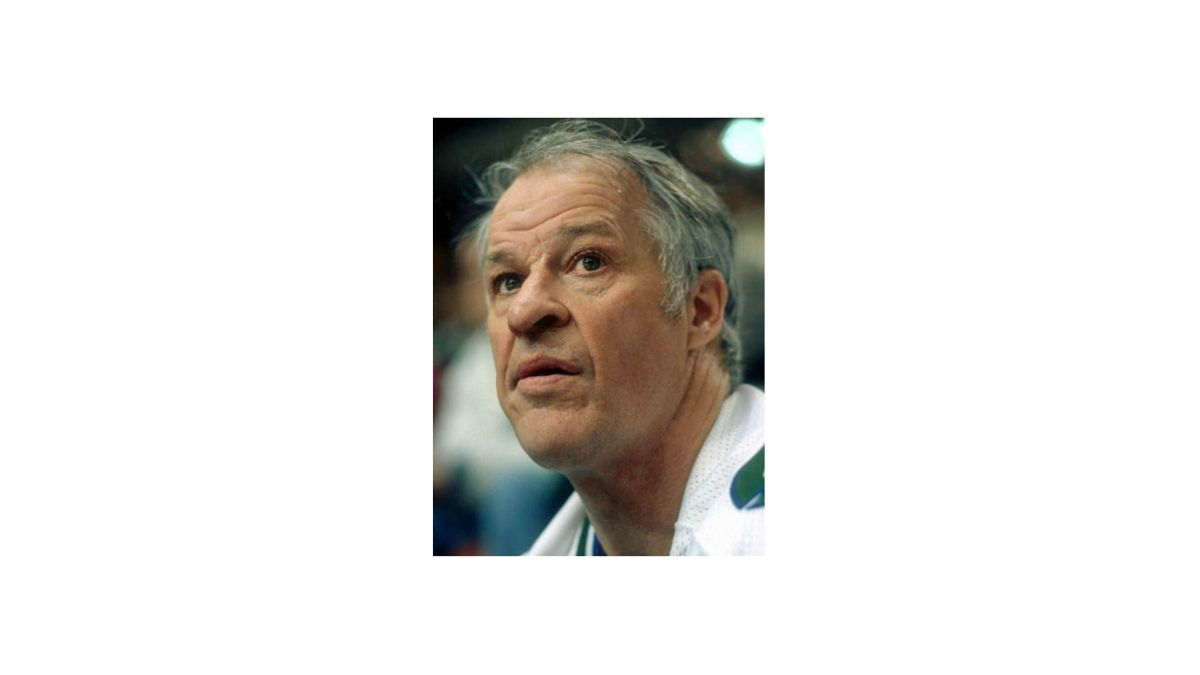
Legendary NHL star Gordie Howe, Mr. Hockey, dies at 88; remembered for skill, toughness, records, and enduring legacy
Doug “Gordie” Howe, one of the most celebrated athletes in North American sports history, passed away at the age of 88. Known universally as Mr.
Hockey, Howe’s death followed complications from a series of strokes he suffered in late 2014 and 2015.
His passing marked the end of an era for the National Hockey League and for generations of fans who grew up watching his unmatched blend of skill, toughness, and longevity.
Born in Floral, Saskatchewan, in 1928, Gordie Howe grew up during the Great Depression. His love for hockey was evident from a young age, and by 1946, at just 18 years old, he debuted with the Detroit Red Wings.
Howe quickly established himself as a force on the ice, combining scoring ability with a physical style of play that intimidated opponents and inspired teammates.
Howe’s career with the Red Wings spanned more than two decades. He led Detroit to four Stanley Cup championships and became the face of the franchise.
His consistency was remarkable: season after season, he ranked among the league’s top scorers while also serving as one of its toughest competitors.
Howe’s ability to score goals, set up teammates, and defend himself in fights gave rise to the term “Gordie Howe Hat Trick” a goal, an assist, and a fight in a single game.
Over his career, Howe won six Hart Trophies as the NHL’s Most Valuable Player and six Art Ross Trophies as the league’s scoring leader.
He was selected to 23 NHL All‑Star Games and retired with 801 career goals and 1,850 points, records that stood for decades until Wayne Gretzky surpassed them.
Howe’s durability was legendary; he played professional hockey across five different decades, even suiting up alongside his sons Mark and Marty in the World Hockey Association before returning to the NHL with the Hartford Whalers.
Howe officially retired in 1980 at the age of 52, closing a career that spanned 32 seasons. He was inducted into the Hockey Hall of Fame in 1972, even before his final playing years.
His influence extended beyond statistics. Howe embodied the spirit of hockey fierce competition balanced with respect for the game.
In recognition of his legacy, the Gordie Howe International Bridge connecting Detroit, Michigan, and Windsor, Ontario, was named in his honor, symbolizing his impact on communities on both sides of the border.
Off the ice, Howe was known as a devoted family man. He and his wife, Colleen, raised four children, including Mark and Marty, who followed in his footsteps as professional hockey players.
Howe’s humility and approachable nature endeared him to fans and fellow athletes alike. Despite his fame, he remained grounded, often crediting his success to hard work and the support of his family.
Gordie Howe’s death in 2016 was mourned across the hockey world and beyond. Tributes poured in from former teammates, opponents, and fans who remembered not only his achievements but also his character.
NHL Commissioner Gary Bettman described Howe as “the most complete player ever to play the game.” His influence continues to resonate, with young players still striving to emulate his combination of skill, toughness, and sportsmanship.
Doug “Gordie” Howe’s passing marked the loss of a true sports icon. His career defined what it meant to be a professional hockey player, and his legacy lives on in the countless athletes and fans he inspired.
From his humble beginnings in Saskatchewan to his decades of dominance in the NHL, Howe’s story is one of perseverance, excellence, and enduring love for the game. As Mr. Hockey, he will forever remain a symbol of the sport’s heart and soul.