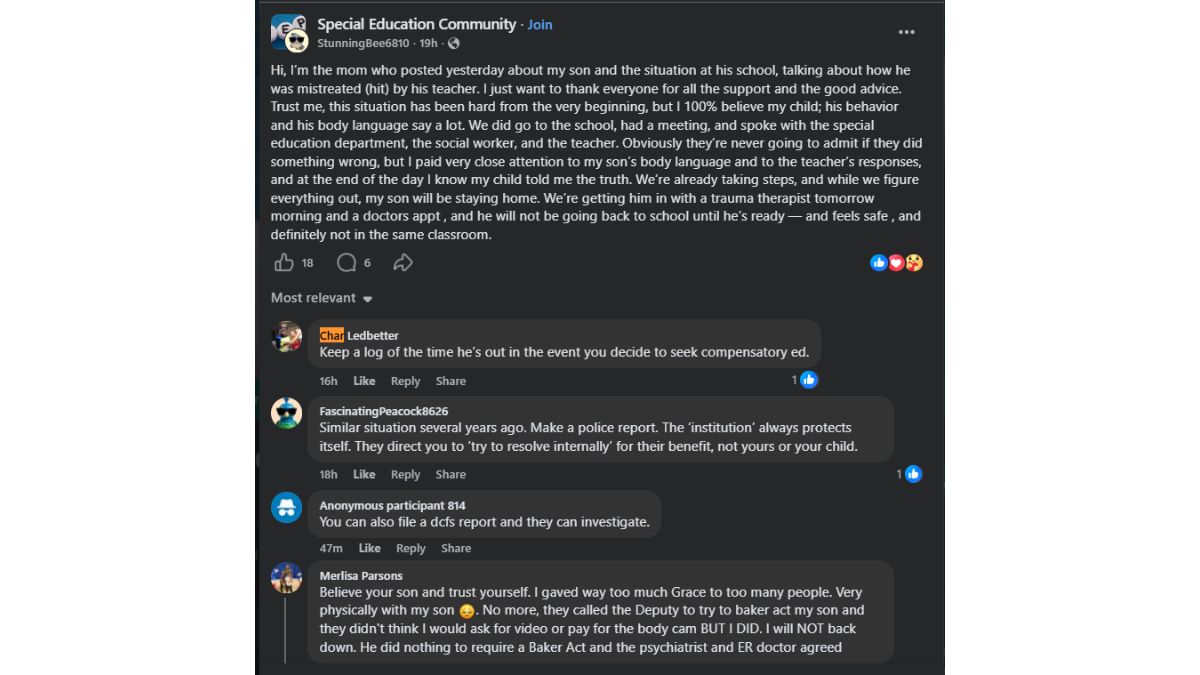
A mother has taken to social media to share a distressing experience involving her son and his school, claiming that he was mistreated by a teacher in a special education classroom.
The post, shared in a special education support community, has drawn significant attention and a wave of supportive comments from other parents and advocates who shared similar experiences and advice.
The mother explained that she previously posted about the situation and wanted to thank those who responded with guidance and encouragement.
She said the situation has been difficult from the beginning, but she firmly believes her child’s account of what happened.
According to her, her son’s behavior and body language convinced her that something inappropriate had taken place at school.
She wrote that a meeting was held with the school, including the special education department, a social worker, and the teacher involved.
While she acknowledged that she does not expect the school to admit wrongdoing easily, she said she paid close attention during the discussions and felt reassured in her belief that her son was telling the truth.
As a result of the incident, the mother confirmed that her son will not be returning to school for now. She stated that he will remain at home while the family works through the next steps.
They are also arranging additional support, including a trauma therapist appointment and a medical checkup scheduled for the following day.
She emphasized that her priority is ensuring her son feels safe before considering any return to the classroom, particularly not in the same environment where the alleged incident occurred.
The post quickly prompted responses from other community members who shared their own experiences and advice on how to proceed.
One commenter, identified as Char Ledbetter, advised the mother to document everything carefully.
“Keep a log of the time he’s out in the event you decide to seek compensatory ed,” the user wrote, suggesting that detailed records could be important if further action is taken regarding the child’s education.
Another user, FascinatingPeacock8626, urged the mother to escalate the matter beyond the school.
“Make a police report. The ‘institution’ always protects itself. They direct you to ‘try to resolve internally’ for their benefit, not yours or your child,” the commenter said, encouraging formal reporting to authorities.
Anonymous participant 814 also suggested involving child welfare services, writing, “You can also file a DCFS report, and they can investigate,” referring to state-level child protection agencies.
Merlisa Parsons shared a more personal account of dealing with a similar situation involving her own child. She described facing resistance from authorities and said she had to push for video evidence. “I will NOT back down,” she wrote, explaining that medical professionals later agreed her child had not required emergency intervention. Her comment reflected strong emotions and determination to challenge institutional decisions.
In response, the original poster asked for clarification about a term used in the discussion. “what’s baker act?” she asked, after another commenter referenced it in relation to involuntary psychiatric evaluation procedures in certain jurisdictions.
Another commenter, Anonymous participant 484, suggested filing formal complaints with educational oversight bodies. They wrote,
“I would file a complaint with the district selpa and the dept of education for your state,” adding that in their own case, a school had been investigated and placed under long-term monitoring after similar allegations.
The discussion highlights the concerns many parents express when dealing with sensitive incidents in special education settings, as well as the variety of paths families may consider, from internal school meetings to legal and governmental complaints.
For the mother at the center of the post, however, the immediate focus remains on her son’s wellbeing, therapy, and ensuring he feels safe before any decision about returning to school is made.