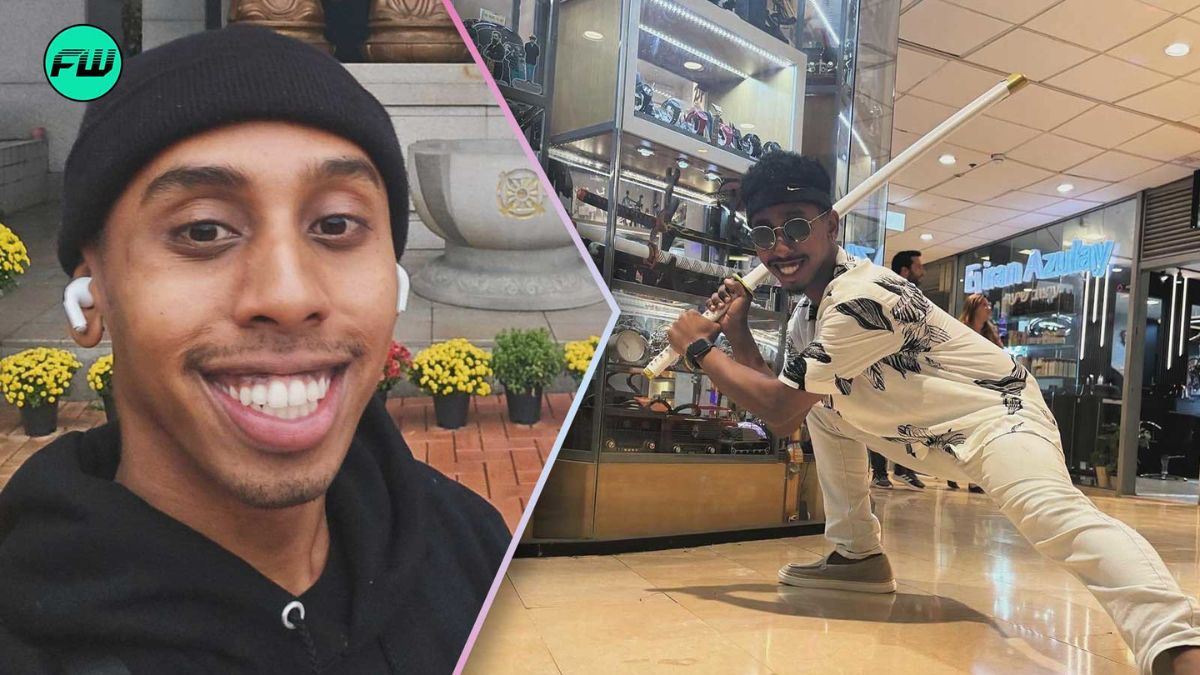
American online content creator Johnny Somali has been sentenced in South Korea to six months in prison with hard labor after being found guilty of multiple charges linked to disruptive livestream activities and the distribution of manipulated sexual images.
The ruling was issued by a judge at the Seoul Western District Court following months of proceedings that drew significant public attention and controversy across South Korea and online communities.
Court ruling and charges
The court found him guilty of obstruction of business and violations under South Korea’s special laws on sexual crimes related to the distribution of fabricated sexual content commonly referred to as deepfakes.
Prosecutors argued that his actions disrupted public spaces, including convenience stores and transport services, while also harming individuals through recorded content shared online.
The court additionally ordered a five-year restriction preventing him from working in institutions involving children, teenagers, and people with disabilities.
He was taken into custody immediately following sentencing and will serve his term in a facility where labor is required, and electronic devices are not permitted.
During the trial, prosecutors had initially sought a longer sentence of up to three years, arguing that his repeated actions showed disregard for local laws and cultural norms.
The final sentence of six months was still accompanied by hard labor, reflecting the seriousness of the offenses under Korean law.
The court also noted incidents, including disruptive behavior in public places, where he allegedly played loud music, spilled food items, and engaged in conduct that disturbed businesses and commuters.
Background and public reaction
Johnny Somali gained attention through livestreams filmed in various countries where he often engaged in provocative behavior intended to attract viewers.
In South Korea, his actions escalated public outrage after he was seen performing disrespectful acts toward a statue symbolizing victims of wartime sexual slavery, as well as engaging in disruptive street behavior. These incidents led to multiple complaints and investigations that ultimately resulted in criminal charges.
Public reaction to the verdict has been divided online. Many users and commentators expressed support for the court decision, stating that it sends a strong message about respecting local laws and cultural sensitivities, while others debated the severity of the punishment.
Social media discussions also highlighted broader concerns about online creators traveling internationally to stage controversial content for views and monetization.
The case has become one of the most widely discussed recent examples of legal action against livestream content creators in South Korea.
Authorities have emphasized that online fame does not exempt individuals from legal responsibility and that actions carried out for entertainment can still result in criminal penalties when they violate national laws or public order.
Legal experts in the region have noted that the case reflects a growing effort by South Korean authorities to address harmful online behavior that crosses into real-world disruption and privacy violations.
The sentencing has been discussed in relation to the increasing number of content creators who travel abroad seeking viral attention without fully understanding local legal boundaries.
Officials have reiterated that filming in public spaces still requires adherence to laws regarding public order, decency, and the protection of individuals.
The outcome of the case is expected to serve as a warning to other creators operating internationally that online content production does not shield them from prosecution when actions violate criminal statutes or cause public harm.